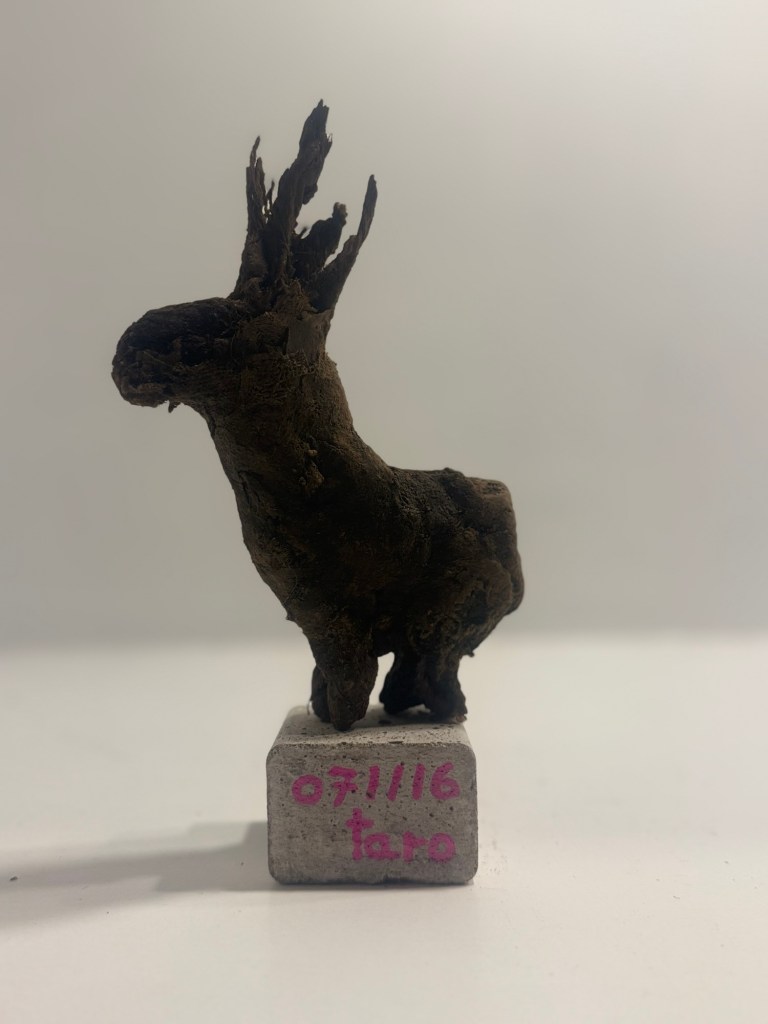
祖父の彫った鹿は、
山の匂いをそのまままとったように、静かに立っていた。
その影を追いかけるようにして、
ある時、僕は一つの“大きな依頼”を前に立ち尽くした。
手が動かなかった。
どれだけ向き合っても、鹿は姿を見せてくれなかった。
そんな僕に、父はただ一言だけ言った。
「ウマの季節になれば、できるよ。」
あとになって、その言葉の意味が胸の奥でほどけた。
誰かの形をなぞるのではなく、
自分の愚かさごと、自分として彫れ——ということだった。
比較のなかで固まっていた
三代の時間が、静かに溶けていく。
そしてある日、
ようやく鹿は現れた。
祖父の鹿でも、父の鹿でもない、
僕の手のかたちで立つ鹿として。
My grandfather’s deer
stood quietly,
as if carrying the scent of the mountains.
Chasing the shadow of that form,
I once found myself frozen
before a significant commission.
My hands would not move.
No matter how I tried,
the deer refused to appear.
Then my father said only one sentence:
“When the season of horses comes,
you’ll carve it.”
The meaning unfolded later—
not to trace another’s shape,
but to carve with my own foolishness,
my own imperfect hands.
The time that had stiffened
across three generations
softened, quietly.
And one day,
the deer finally appeared—
neither my grandfather’s nor my father’s,
but one standing in the shape
my own hands were born to make.
 TARO MIZUSHIMA